


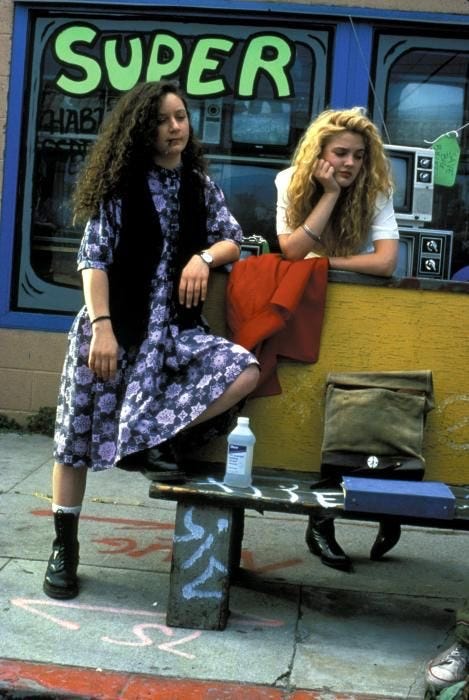
The 90s are back.
Which makes sense. We’ve decided, collectively, that they were great.
And they were. We were younger. Things felt easier. There was less documentation, more living, fewer angles.
But we are remembering them very selectively.
I was there and lest you think it was all CBK and fabulousness, there were indeed some clunkers. And I have notes.
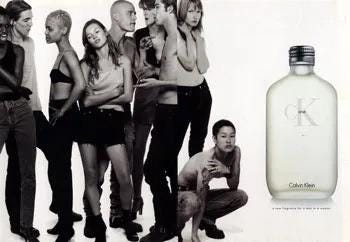
CK One
CK One arrived in 1994 like a fog of ambition and bad decisions. It was marketed as a shared fragrance, for men and women, which, in retrospect, was the 90s telling us it was progressive while giving everyone the same headache. It smelled like a glass of water that had opinions about itself. I dated someone who wore it. I broke up with them. I am not saying CK One ended the relationship, but I am not not saying that either. Scent memory is real, it is visceral, and mine is apparently litigious. There was also Body Shop Vanilla and way too much Cool Water. And ps, the ad campaign above was glorious. This much I know. The fragrance? Not so much.

Brown Lipliner
Not just brown. A very specific shade of brown, the color of a UPS truck, or bad news delivered calmly, worn as a hard, defined outline around lips that were then filled in with a lipstick several shades lighter. The effect was that everyone’s mouth looked like it had been sketched in pencil first and then someone ran out of time. It was everywhere. It was on magazine covers. It was aspirational. We thought it looked good. I cannot explain this. I can only report it. For the record, it was most likely MAC Spice. Also that hair.
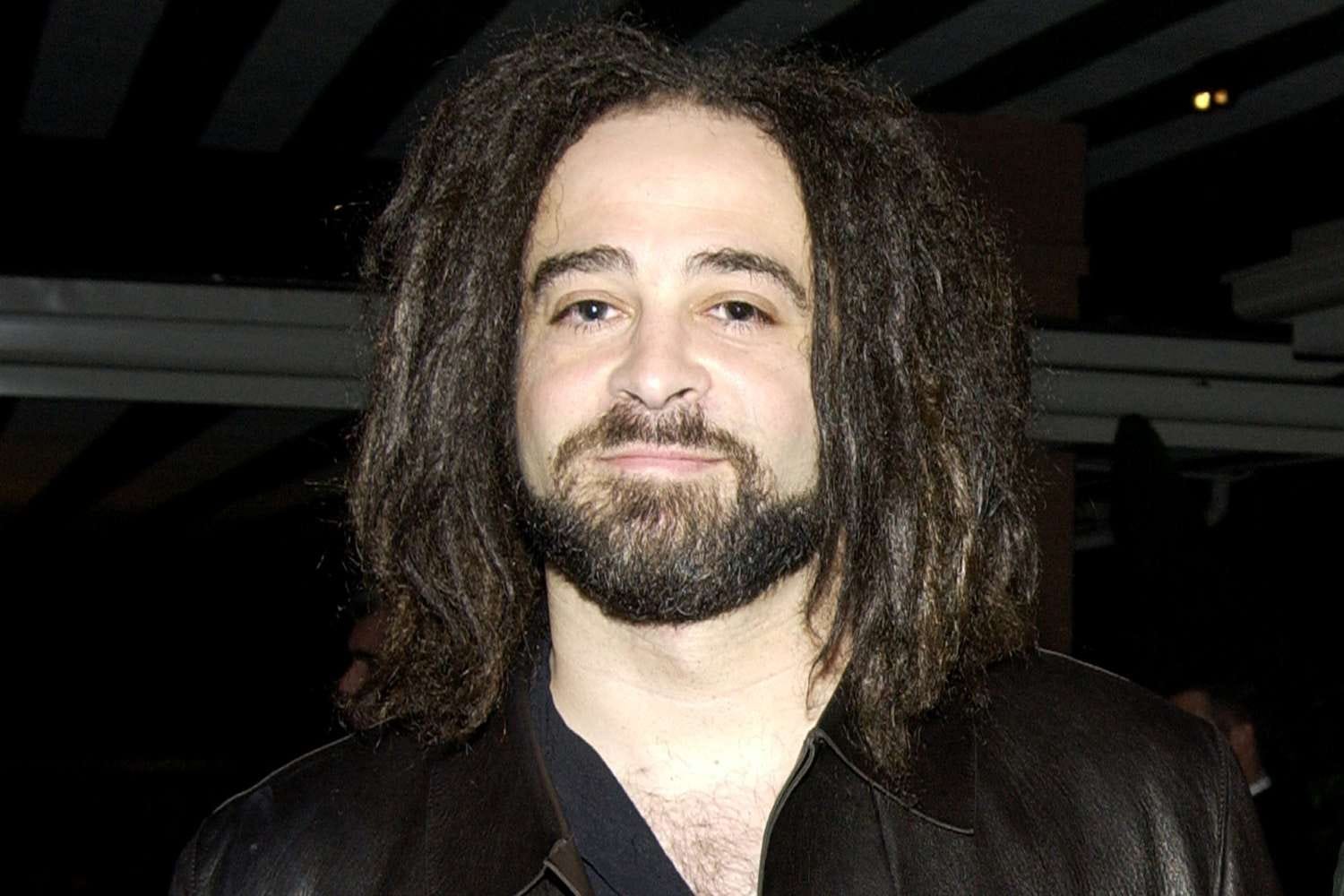
Adam Duritz
Lead singer of the Counting Crows. Dreadlocks that appeared to have their own gravitational pull. A voice like he was perpetually processing a breakup that happened three years ago, but he was not ready to talk about it yet. And somehow, one of the great heartthrobs of the decade. He dated Jennifer Aniston. Courteney Cox. Mary Louise Parker. The man was apparently irresistible, and I spent the entire decade unable to understand why, which I now believe was a personal failing that I have made my peace with. Mostly.
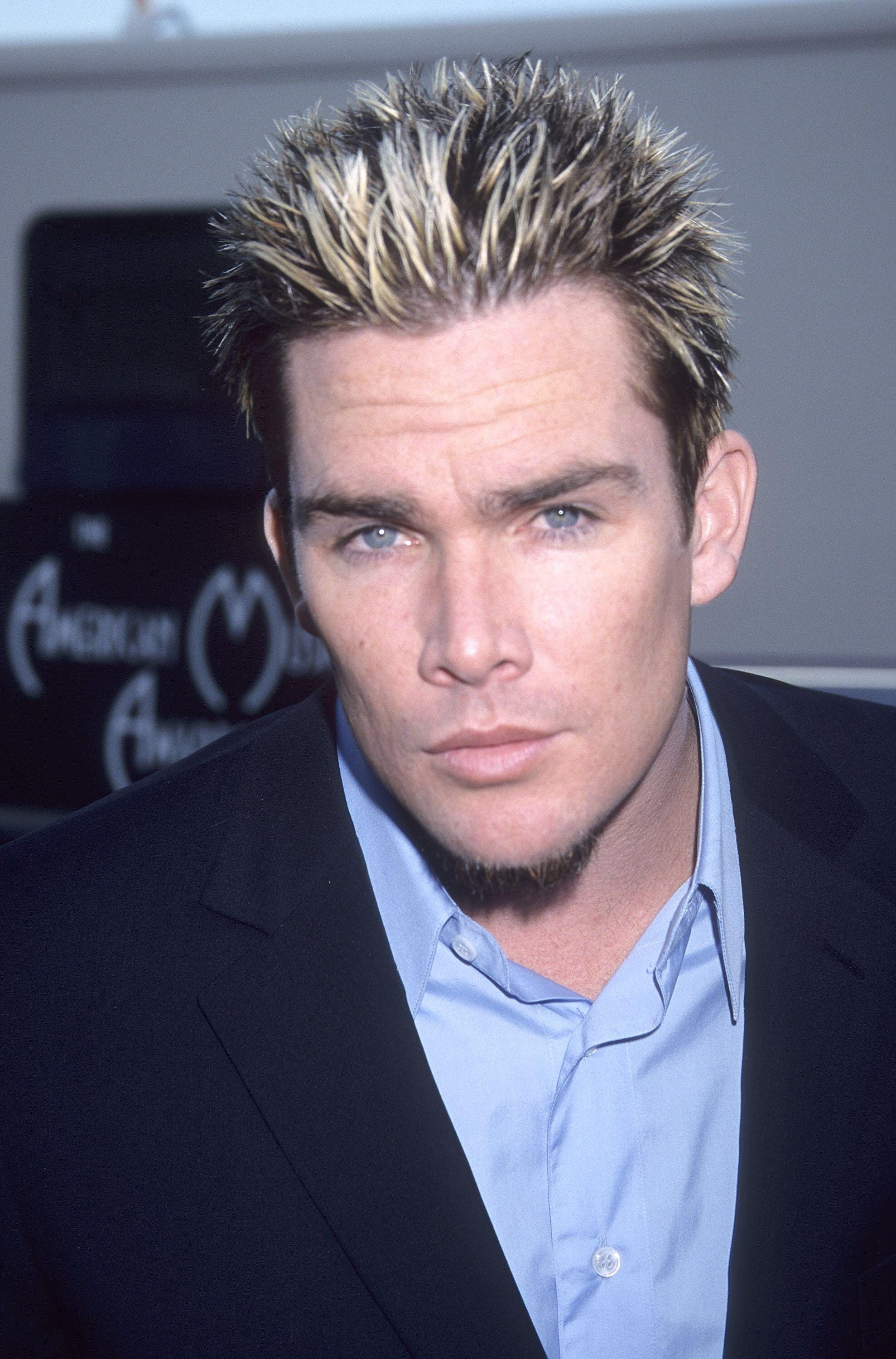
Frosted Tips
The look where men bleached just the ends of their hair, as if they had been briefly dipped headfirst into something regrettable. It was everywhere, on your friends, your favorite athletes, the guy at the bar who definitely had a band. The idea, as far as anyone could tell, was to look like you had been kissed by the sun. The reality was that you looked like you had lost a bet. It persisted for years. No one stopped it.
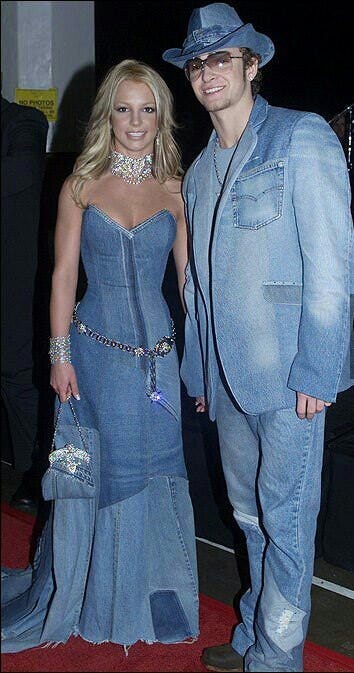
The Britney and Justin Denim Situation
In 2001, technically the border of the 90s but spiritually its culmination, Britney Spears and Justin Timberlake arrived at the American Music Awards wearing matching head-to-toe denim outfits. His, a denim suit. Hers, a denim gown. Both, somehow also wearing denim accessories. It looked like two people who had been tragically caught in a Gap explosion. It is one of the most famous outfit pairings in history, which is saying something, because they were looks that should never have existed. They were the most famous couple on earth, and they chose this. Nobody stopped them. This is what happens when you give people too much power too young.
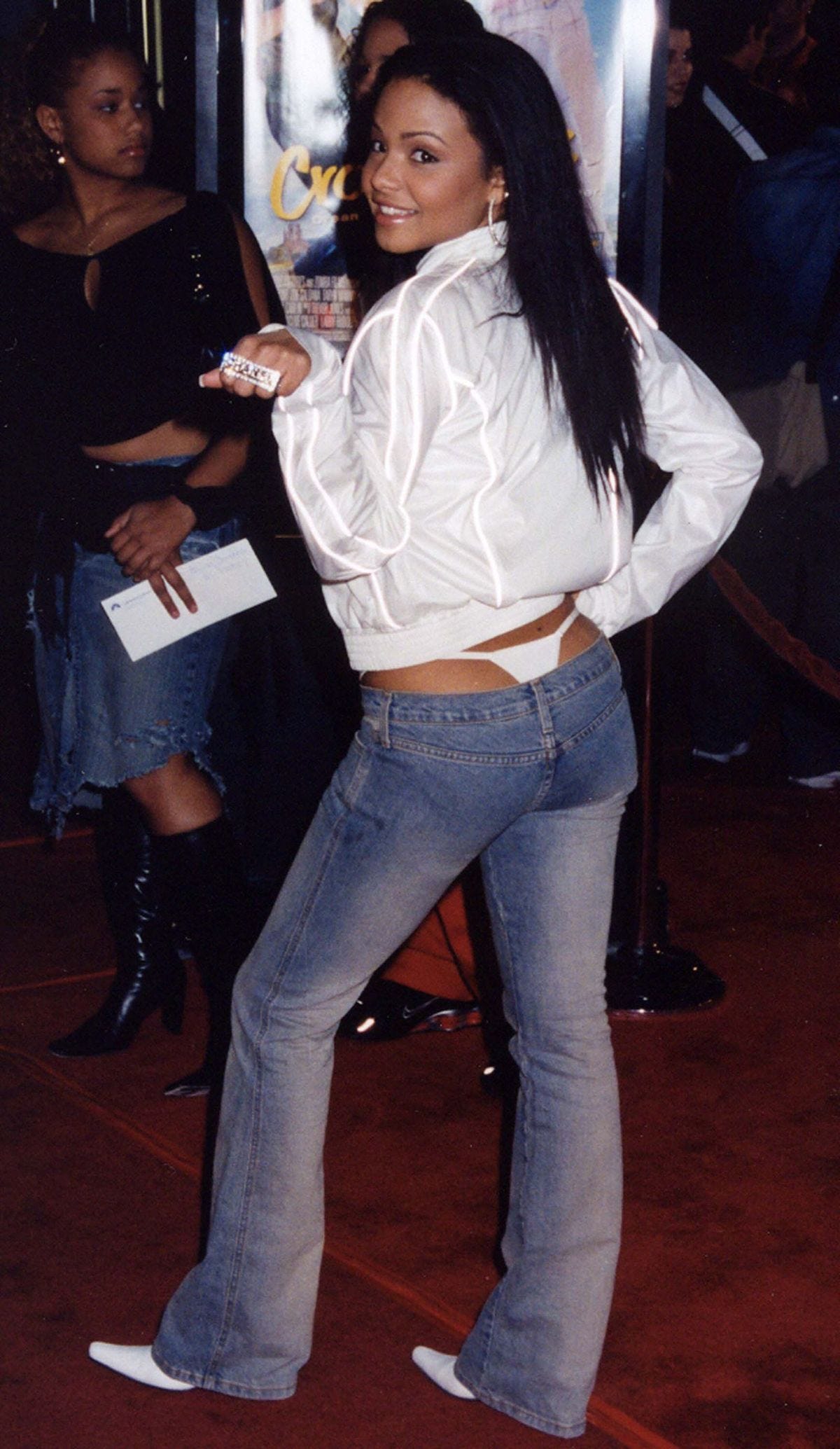
Thong Underwear
At some point in the late 1990s, someone made the decision that underwear should be optional in the back, that the entire purpose of the garment could be accomplished with what was essentially a string and a prayer, and the rest of the decade just went along with it. The pitch, as best as anyone could reconstruct it, was no visible panty lines. The reality was a permanent, voluntary wedgie. A wedgie you chose. A wedgie you paid for. They were sold in every color, they were shown above waistbands as a matter of fashion, and women across America walked around in low rise jeans quietly suffering and calling it style. It was not style. It was a hostage situation with elastic.

Dial-Up Internet
That sound, the shrieking, the static, the chaotic handshake that meant you might be connected to something, was somehow considered acceptable. You would tie up the phone line for forty five minutes to load a webpage that was mostly gray. This was Tuesday. We called it the future.
I know how bad it was because I have the bill.
After somehow talking my boss into sending me to Israel to document the trance scene, and yes, that was a job, and yes, those were the days, I ran up a dial up bill at my hotel that cleared five thousand dollars. Not a typo. Five thousand dollars to connect to the internet at the speed of a very tired fax machine, from a hotel room in Tel Aviv, because that was the only way to file anything, reach anyone, or confirm that the outside world still existed. The invoice arrived and I stared at it the way you stare at a car accident, unable to look away, unable to fully process what you are seeing.
The 90s internet was not free. It was not fast. It was not reliable. But it was apparently very expensive to use badly from another continent, and I have the receipts. Literally.
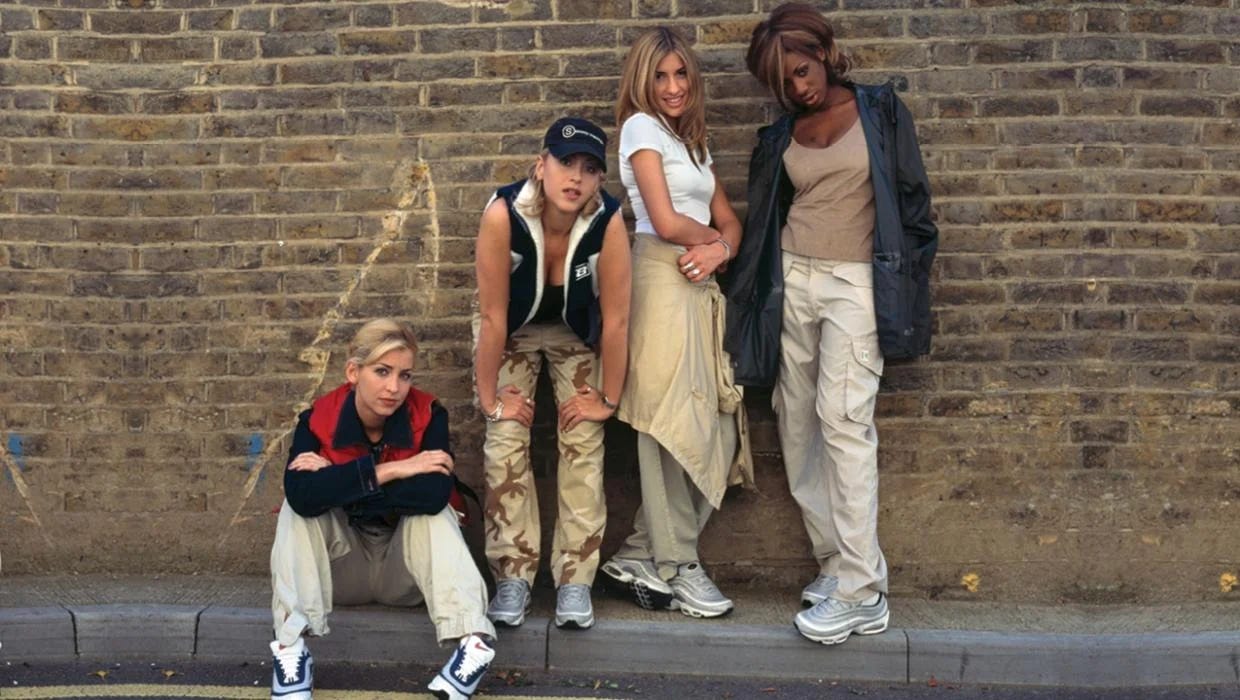
Cargo Pants
Cargo pants had so many pockets that they stopped being pants and became a philosophical position. There were pockets on the thighs, pockets below the pockets, pockets that zipped, pockets that velcroed, pockets whose purpose has never been satisfactorily explained. Nobody filled all the pockets. That was not the point. The point was the possibility of pockets, the implication that at any moment you might need to carry seventeen separate items on your person, and you would be ready. You were never ready. The pockets were always empty. The pants were enormous.
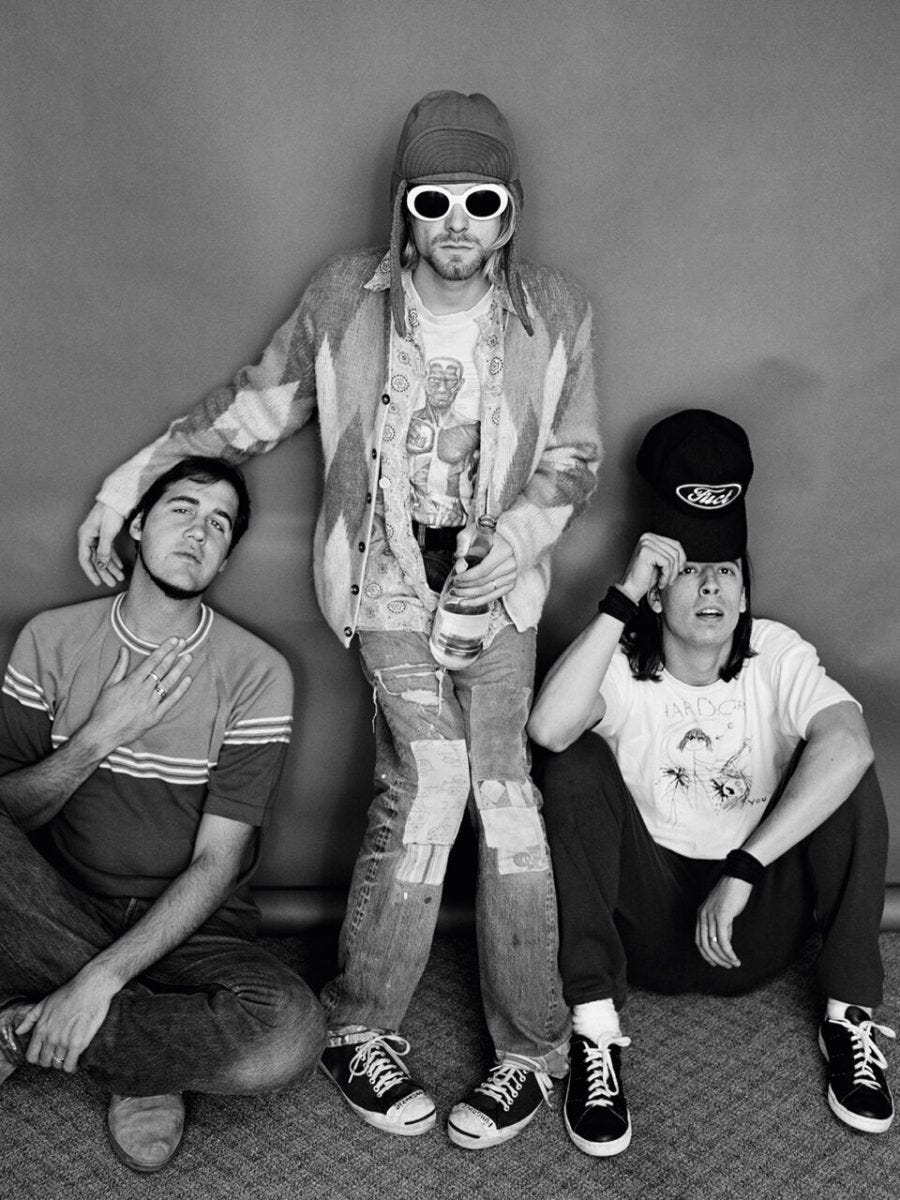
Grunge
Grunge arrived in the early 90s with a very specific message: I do not care; I have not showered; and here is a flannel shirt I appear to have slept in, possibly in a field. Kurt Cobain. Eddie Vedder. A general aesthetic of noble suffering and unwashed hair that was presented as authentic, rebellious, and deeply cool. And maybe it was. I was not the audience. It all was just too much of a bummer.
I did not want to look like I was recovering from something. I did not want to wear flannel. I did not want my boots to suggest that I had opinions about capitalism while also potentially doing light construction work. The whole thing felt aggressively, programmatically gloomy in a way that made me want to put on something with a waistline and go somewhere with a velvet rope. I did, however, have a massive crush on Chris Cornell. Who didn’t? Also, Kurt Cobain was one cool motherfucker, but guys who tried to emulate him weren’t.
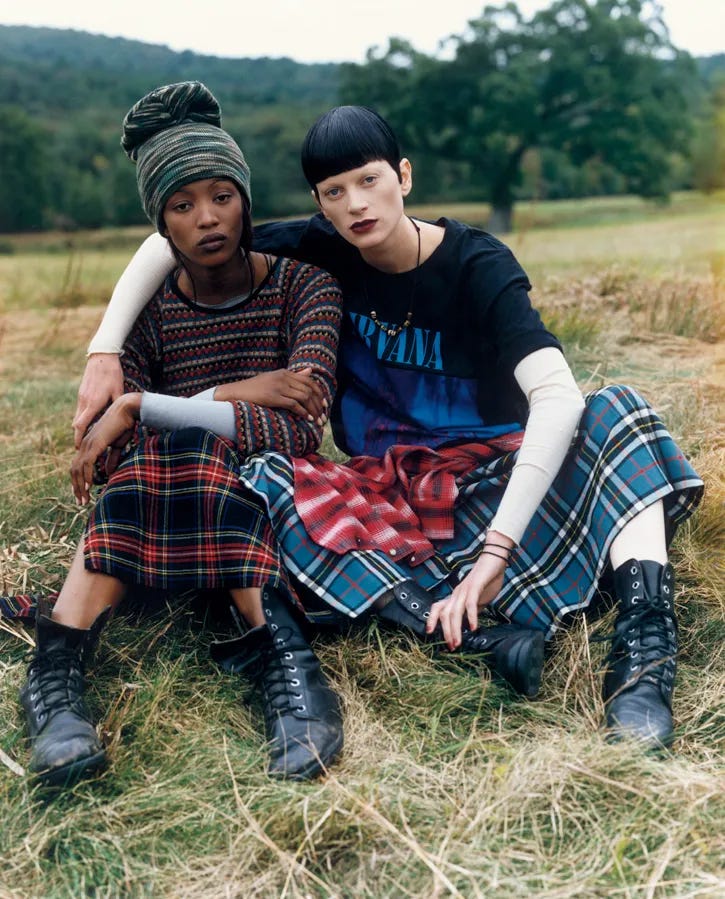
And then Marc Jacobs showed his infamous grunge collection for Perry Ellis in 1993, and suddenly the whole thing was fashion. Silk slips. Luxe fabrics cut to look deliberately undone. Models who looked like they had not slept but were doing it expensively. He got fired for it, which tells you everything about how the fashion establishment felt, and then history proved him right, which tells you everything about how fashion works. Grunge became a mood board. The flannel became a statement. The boots got very expensive.
The General Certainty That Everything Was Fine
Perhaps the defining feature of the 90s was the confident, cheerful, almost aggressive sense that things were going well and would continue to do so. The economy was good. The Cold War was over. Everyone was buying things and building websites and dressing in full denim, and there was simply no reason to worry. It was the last decade before everything got complicated, which in retrospect gives it a certain sweetness, but also explains why we were so distracted that nobody stopped the frosted tips, nobody interrogated the brown lipliner, nobody sat Britney and Justin down and said please, for all of us, just wear different clothes.
We were busy. We were happy. The dial-up was connecting.
We did not know what we had, or what we looked like, or what was coming.
But at least we can say we smelled terrible, and we did it together.
Honorable Mention: Poker Straight Hair and the Body That Went With It
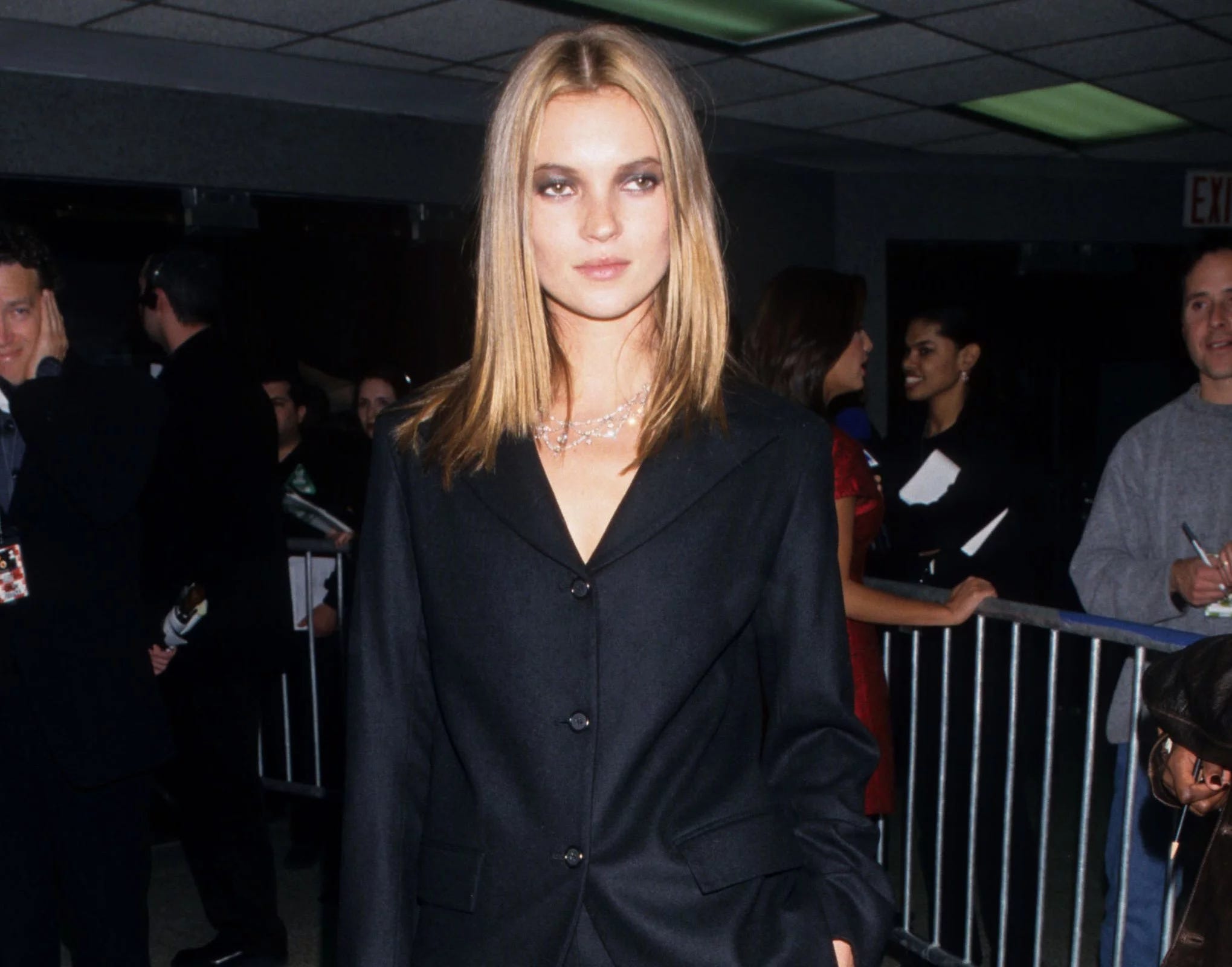
The 90s had a look. Not just a fashion look, a body look. The ideal was very specific, thin in a particular angular, jutting hip, visible clavicle way, topped with hair so straight it appeared to have been ironed flat by someone with a grudge. Kate Moss. Calista Flockhart. Every heroin chic editorial in every magazine you could buy at any checkout counter in America. It was presented not as one aesthetic among many but as the aesthetic, the finish line, the goal, the thing you were supposed to be working toward.
For a wavy-haired girl with actual hips, this was not so much an aspiration as a geography problem. You could not get there from here. You could blow-dry until your arms gave out, and you were still going to have hair that had its own ideas, on a body that was built for something other than disappearing. The straight hair trend eventually ended. The body trend took longer, did more damage, and is frankly still being litigated.
But I will say this. My hair has never once been poker straight, and I have survived. Because keratin treatments. Where were those when we really needed them? XO
If you’re new here, welcome.
Tomorrow’s post is for paid subscribers, and it’s a different kind of piece. Quieter, more specific, and very much about the kind of woman I think we’re all becoming.
Grunge and cargo pants as a negative???? Come on.
I was in my 20s in the 90s and this is completely accurate